Energy, water, chillers, and treatment plants are a module of the same system — not a separate IoT company. Nova reads the series. Atlas already has the asset. Orbit can open the job.
A spike should become a job, not a month-end bill.
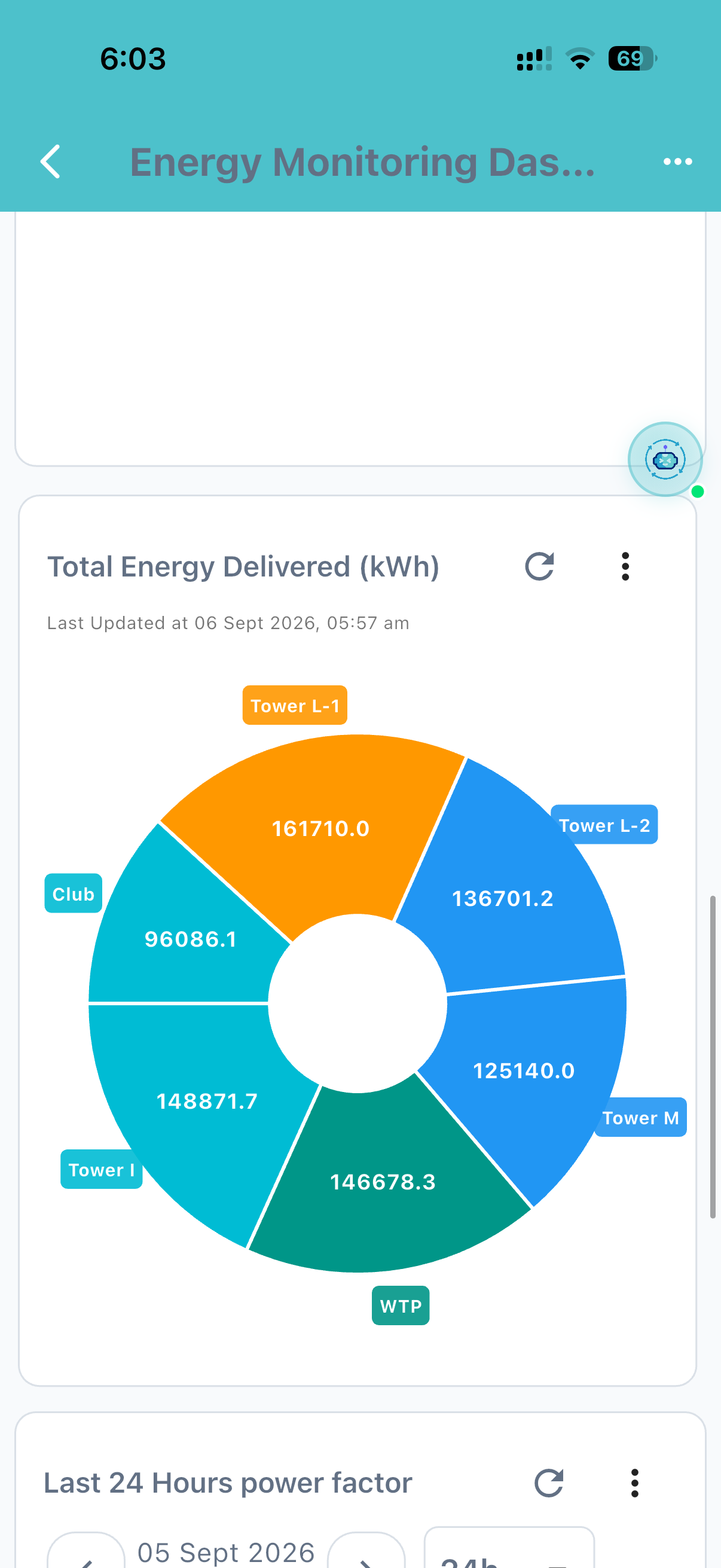
Energy delivered across towers, WTP, and club.
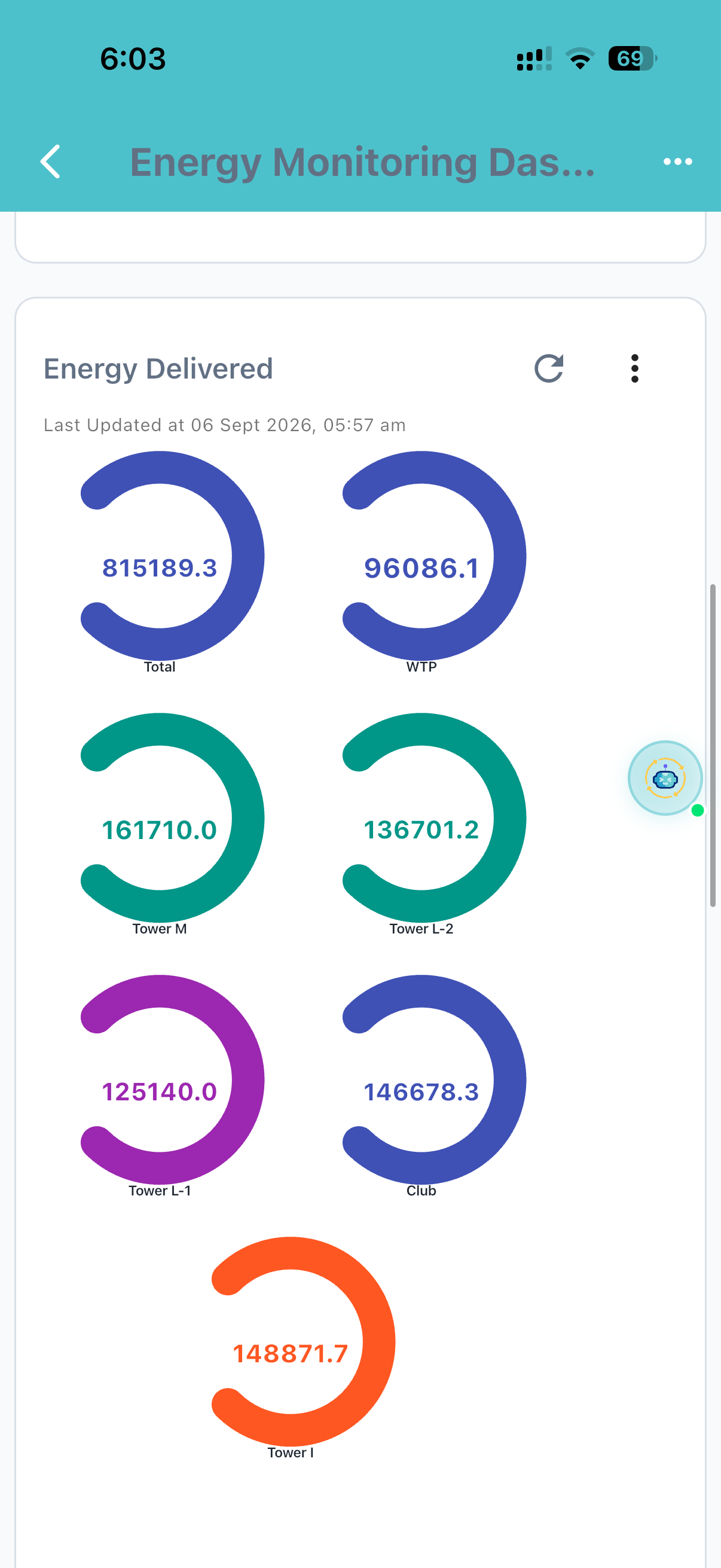
Zone gauges Nova reads in the industrial module.
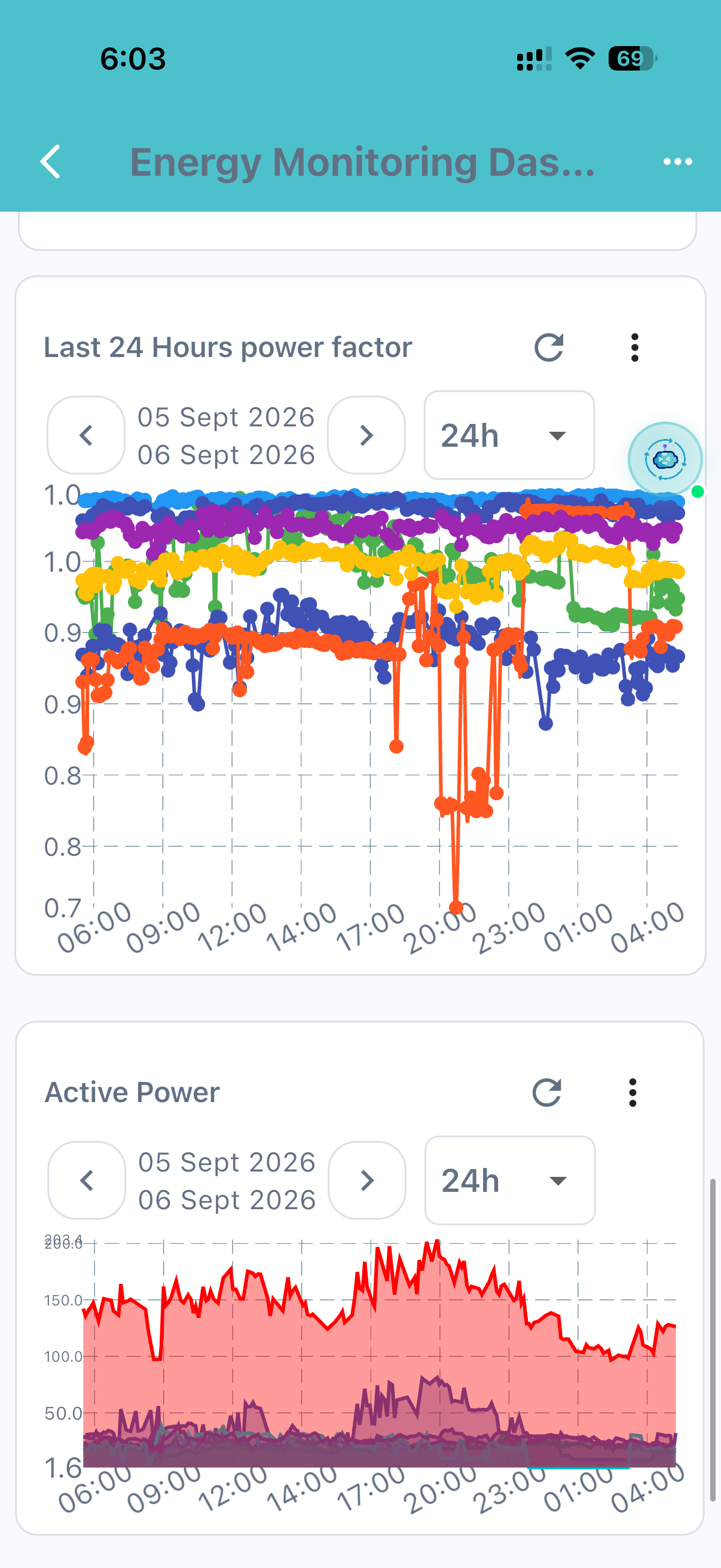
Power factor and active power on the same energy dashboard.
Where Nova reads
Plant rooms, not a product catalogue
These are the signals the energy module already understands. They are not extra modules on
the homepage.
Energy & i-EMS
A spike becomes a ticket, not a screenshot.
Demand and exceptions that can become a ticket.
Read campus and plant electrical systems as work — not a month-end bill. Nova highlights the interval, Atlas already has the feeder, Orbit can assign it.
Energy on MatriqGo is the first place Nova reads. The loop is the same as the rest of the platform: anomaly → ticket → assign → verify.
— Feeder and transformer load with demand windows
— Exception detection on unexplained spikes or idle waste
— Role-scoped views for plant, FM, and leadership
Water level & pumps
Tanks, levels, and pump run-hours without the night walk.
Levels and pumps next to the tickets they create.
Level sensors and pump telemetry tell Nova when to run, when to wait, and when a dry-run or overflow is forming.
Water is a control loop with consequences. Nova keeps the loop visible and hands Atlas the pump asset when the hours say a service is due.
— Tank and sump levels with hysteresis the operator can see
— Pump starts, run-hours, and trip context
— Dry-run and overflow predictions before the basement call
Chiller automation
Plant-room setpoints with an operator still in charge.
Chiller loops with an operator override, not a locked PLC screen.
Chillers, related pumps, and temperatures are automated with override — so comfort and efficiency do not depend on whoever has the night key.
Chiller automation is useful only if someone can still take the wheel. Nova runs the loop; RBAC decides who may change it; Orbit records the work when the machine disagrees with the plan.
— Supply/return and approach temperature trends
— Staging and setpoint automation with explicit override
— Anomaly cues that open work against the chiller asset
STP automation
Treatment that logs itself.
STP run-state in the same tenant as the people who answer for it.
Sewage treatment plants get run-state, levels, and fault cues in the same tenant as the rest of the facility — so a trip is a ticket, not a rumour.
STP work is often invisible until it is not. Nova keeps the plant on the same board as the people who have to answer for it.
— Process stages and equipment run-state
— Level, blower, and pump exceptions
— Operator notes attached to the plant asset
WTP automation
Incoming water with the same discipline as the rest of the plant.
Levels and pumps next to the tickets they create.
Water treatment gets automation and anomaly detection alongside storage and pumping, so quality and availability are operational facts.
WTP is a sibling of STP and pumping, not a one-off SCADA island. Nova treats it as another industrial circuit inside the platform.
— Treatment stages and critical equipment state
— Throughput and trip patterns
— Predictions that feed Atlas service windows
Also in the field
Same agent. Same loop.
Campus, hybrid power, gensets, compressors — Nova still turns an anomaly into work. A
digital twin is platform depth over assets and signals, not a tenth module.
Smart campus
How the same IoT / Energy module behaves on a society or mixed campus — plant rooms and towers in one system, not a second product.
Smart campus is how the same industrial module behaves when the site is a society or mixed campus rather than a single factory floor.
DG / solar hybrid
A secondary pattern for sites that blend grid, diesel, and solar — so changeover and contribution stay visible to the roles that pay the bill.
Hybrid power is an accounting and operations problem. Nova records the mix; energy views stay inside the same i-EMS chapter.
Genset
Treat diesel gensets as assets with telemetry — the same anomaly → ticket loop, not a forgotten backyard machine.
Gensets already have nameplates and AMCs. Nova just stops them from being invisible between tests.
Compressor telematics
A secondary pattern for industrial air: run-hours, trips, and load cycles that should have been work orders last quarter.
Compressor telematics is plant hygiene. The point is not another chart — it is a service interval that updates itself.
Digital twin
A view over assets and signals you already have. Not a separate product, and not something we sell in the module grid.
A twin is useful when it is thinner than a simulation project. MatriqGo treats it as platform depth over Atlas and Nova — not a module you buy on its own.
Bring a single-line diagram to the demo.
Get started on the product, or start on the Android and iOS apps the floor already uses. Call or email if you already know the sites.